Deploying PHP applications
By Flavio Copes
Learn how to deploy PHP applications, from PHP's classic drop-a-file simplicity to modern Git deploys on a PaaS like the DigitalOcean App Platform.
When you’ve got an application ready, it’s time to deploy it and make it accessible from anyone on the Web!
PHP is the programming language with the best deployment story across the Web.
Trust me, every single other programming language and ecosystem wish they were as easy as PHP.
The great thing about PHP, the thing it got right and allowed it to have the incredible success it had, is the instant deploy.
You put a PHP file on a folder served by a Web server, voilà it just works.
No need to restart the server, run an executable, nothing.
This is still something that a lot of people do. You get a shared hosting for 3$/m, upload your files via FTP, done.
These days however I think Git deploy is something that should be baked into every project, and shared hosting should be a thing of the past.
One solution is always having your own private VPS (Virtual Private Server), which you can get from services like DigitalOcean or Linode (Akamai).
But managing your own VPS is no joke, it requires serious knowledge and time investment, and constant maintenance.
(If you do go the VPS route, I built a free VPS sizing calculator that tells you how big a server you actually need for your traffic.)
You can also use the so-called PaaS (Platform as a Service), which are platforms that focus on taking care of all the boring stuff (managing servers) and you just upload your app and it runs.
Solutions like DigitalOcean App Platform (which is different from a DigitalOcean VPS), Railway, Fly.io, Render or Heroku are great for your first tests. Don’t count on a free plan: Heroku dropped its free dynos in 2022, and most PaaS charge as soon as you run a real container.
These services allow you to connect your GitHub account and deploy any time you push a new change to your Git repository.
This is a much better workflow compared to FTP uploads. (If you don’t have PHP running locally yet, see how to set up PHP first.)
Let’s do a bare bones example.
I created a simple PHP application with just an index.php file:
<?php
echo 'Hello!';
I add the parent folder to my GitHub Desktop app, I initialize a Git repo and I push it to GitHub:
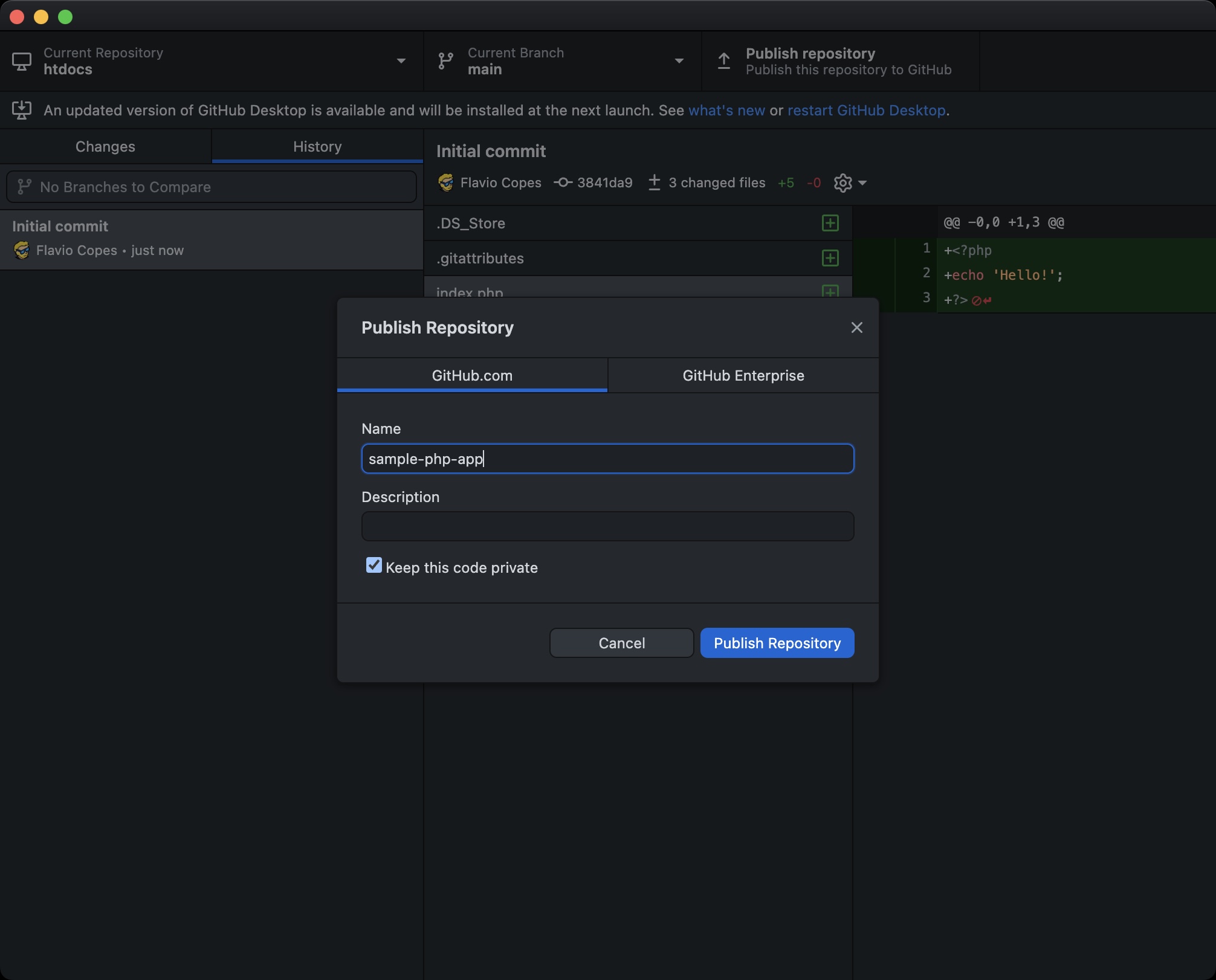
Now go on digitalocean.com
If you don’t have an account yet, sign up for DigitalOcean with my referral link and you get $200 in credit for 60 days, enough to work on your PHP app for free. This is an affiliate link: if you sign up through it and then spend $25, I get $25 in DigitalOcean credit.
I connect to my DigitalOcean account and I go to Apps → Create App.
I connect my GitHub Account and select the repo of my app.
Make sure “Autodeploy” is checked, so the app will automatically redeploy on changes:
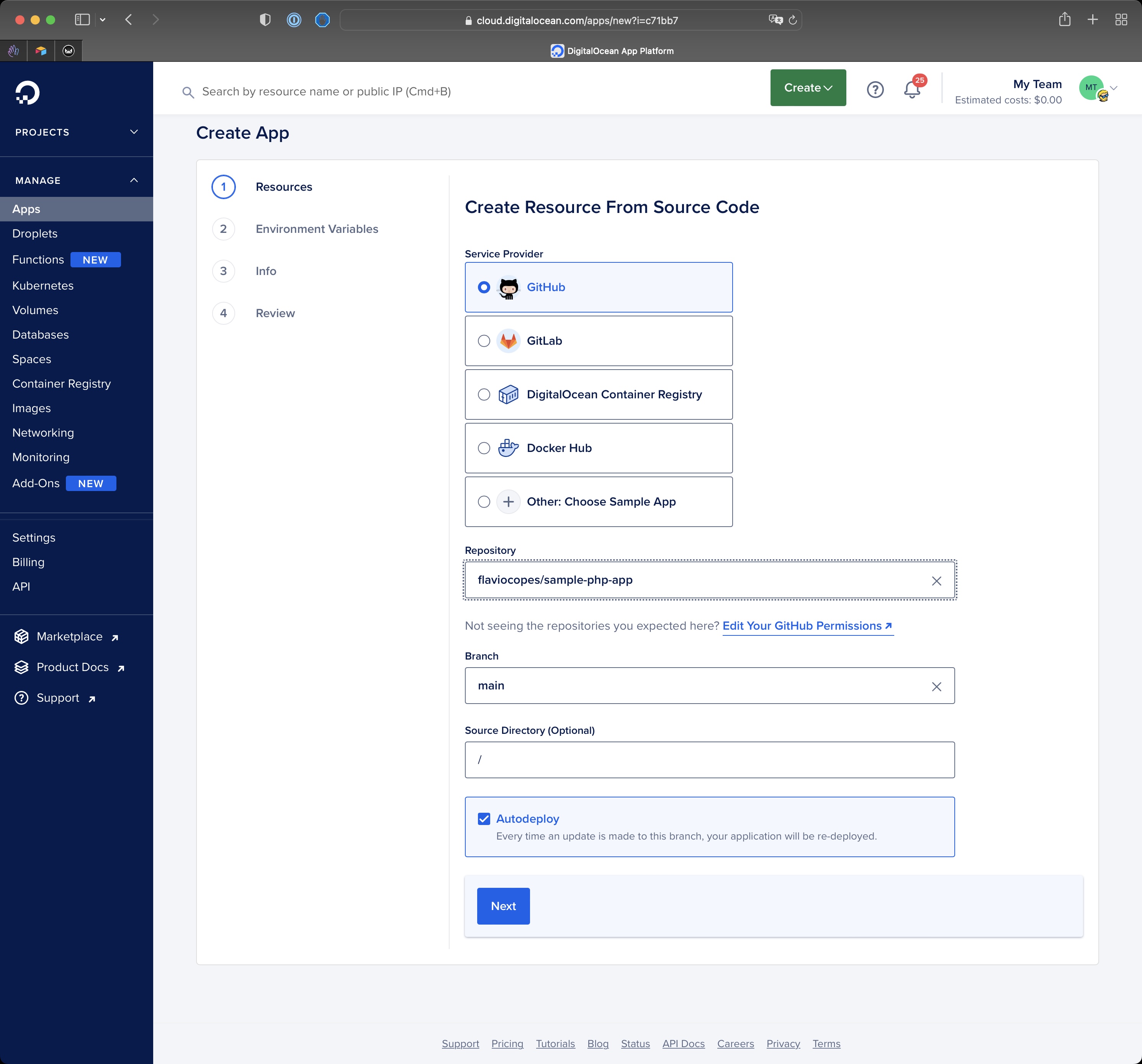
Click “Next”, then edit the plan for the web service.
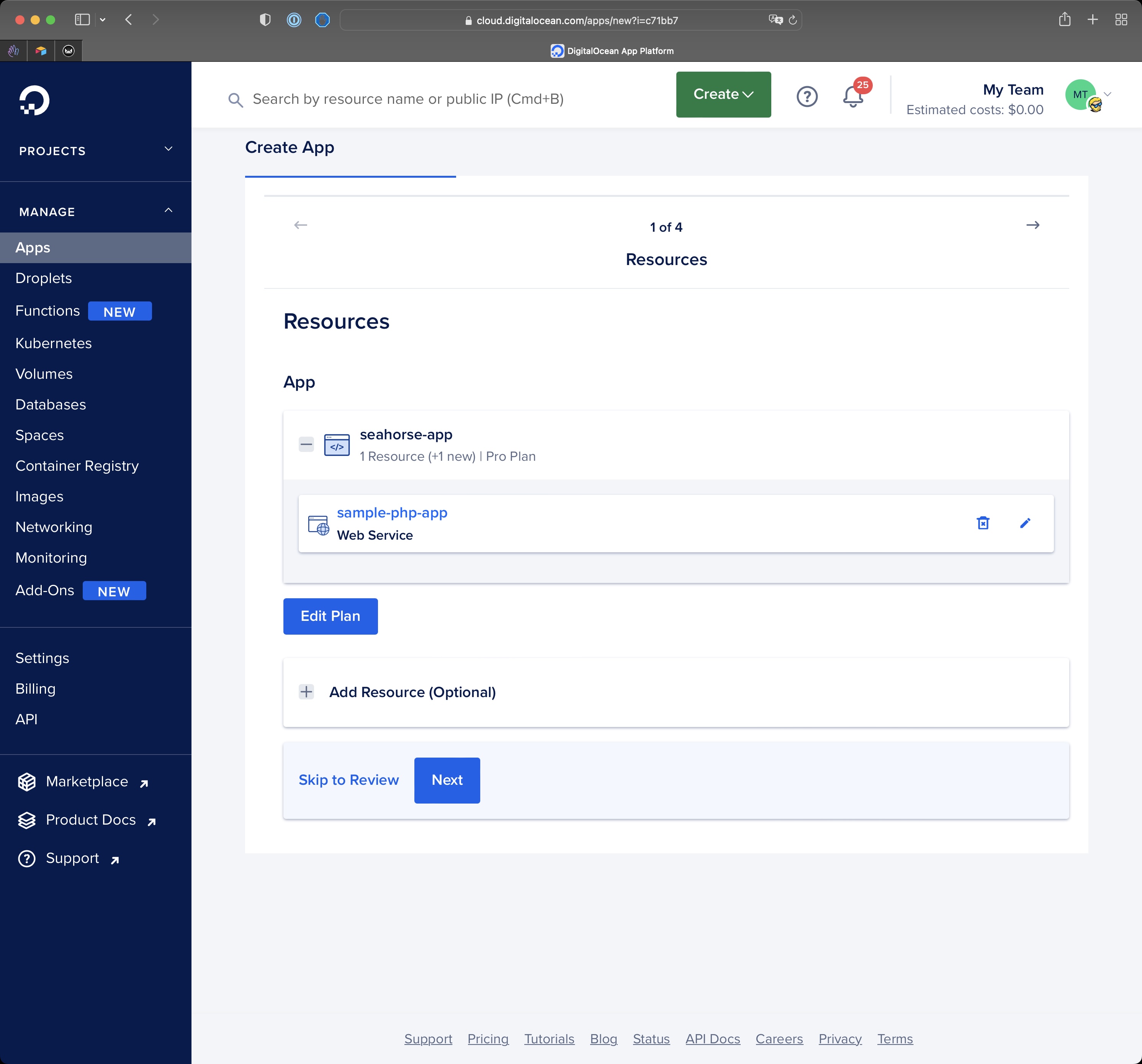
App Platform no longer uses the Basic and Pro labels you see in my screenshots (they are legacy plans now). There is a free tier, but only for static sites. Anything that runs code, like a PHP web service, needs a container, and containers are priced by size.
Pick the smallest shared container: 1 shared vCPU, 512 MiB RAM, $5/month as of September 2026. Bigger shared and dedicated sizes are there when you need them.
NOTE: you pay per second the container runs, with a one-minute minimum, so you can destroy the app any time you want
The screenshots below show the older UI with Basic and Pro. The idea is the same: pick the cheapest container that can run PHP.
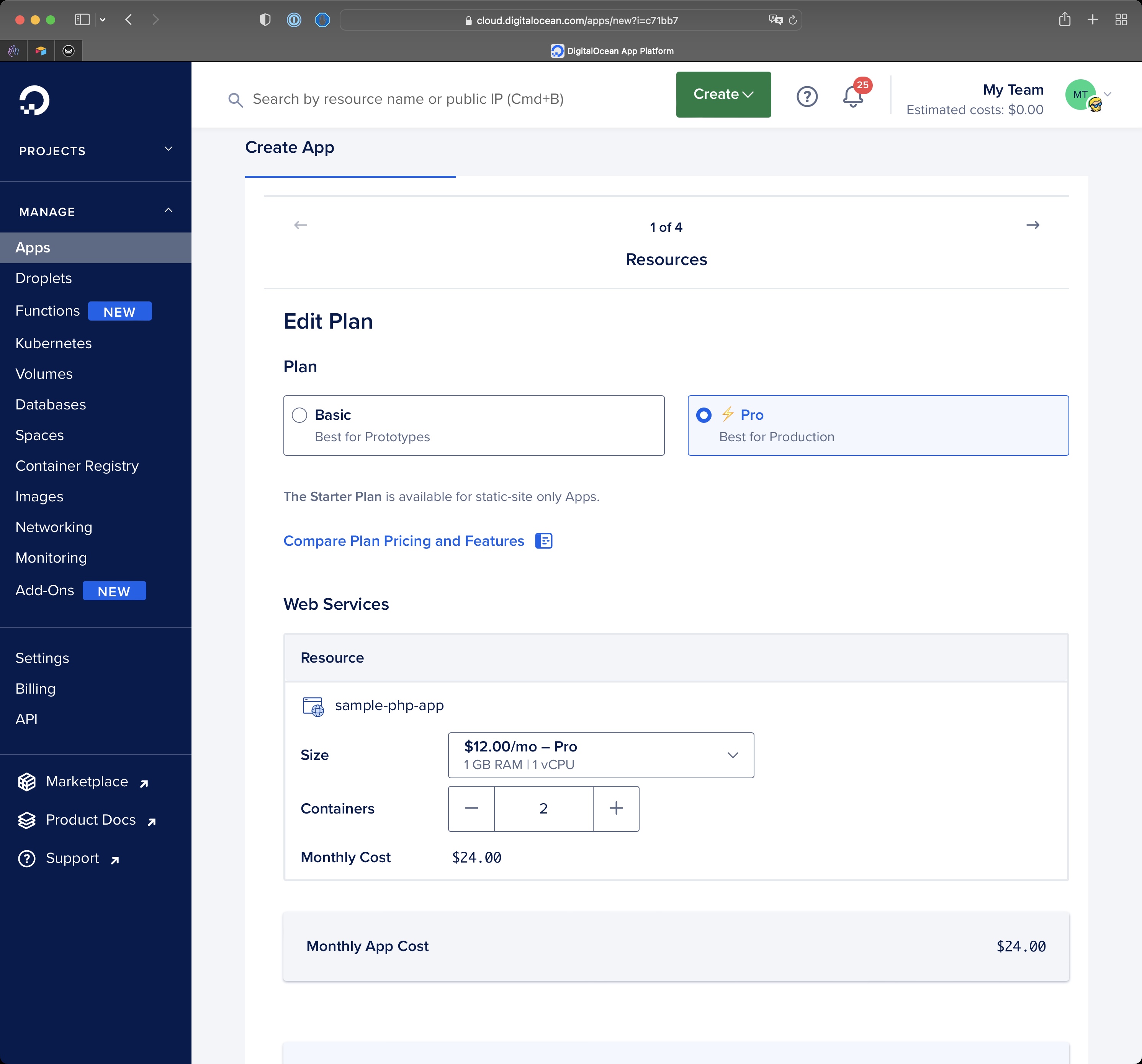
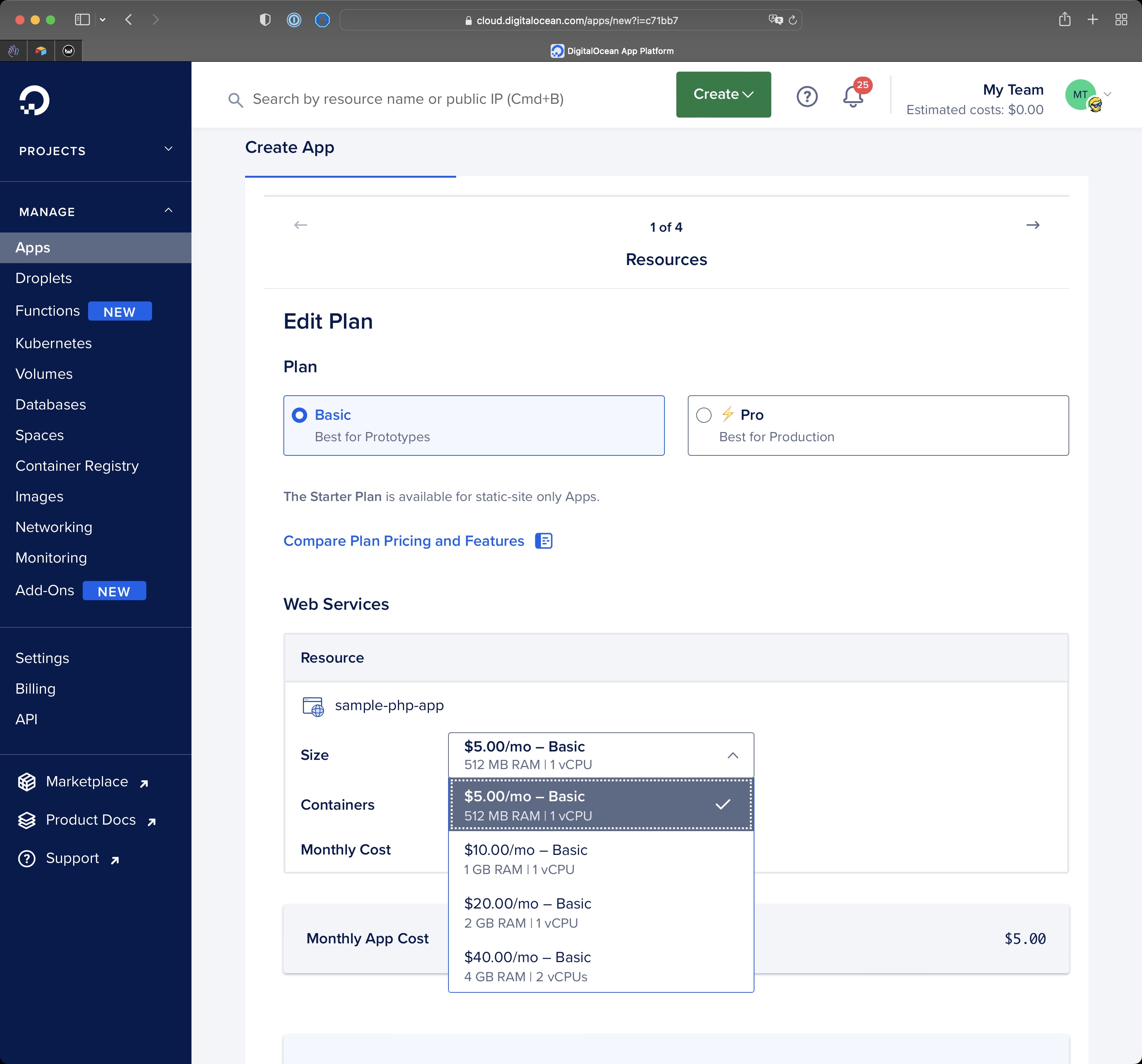
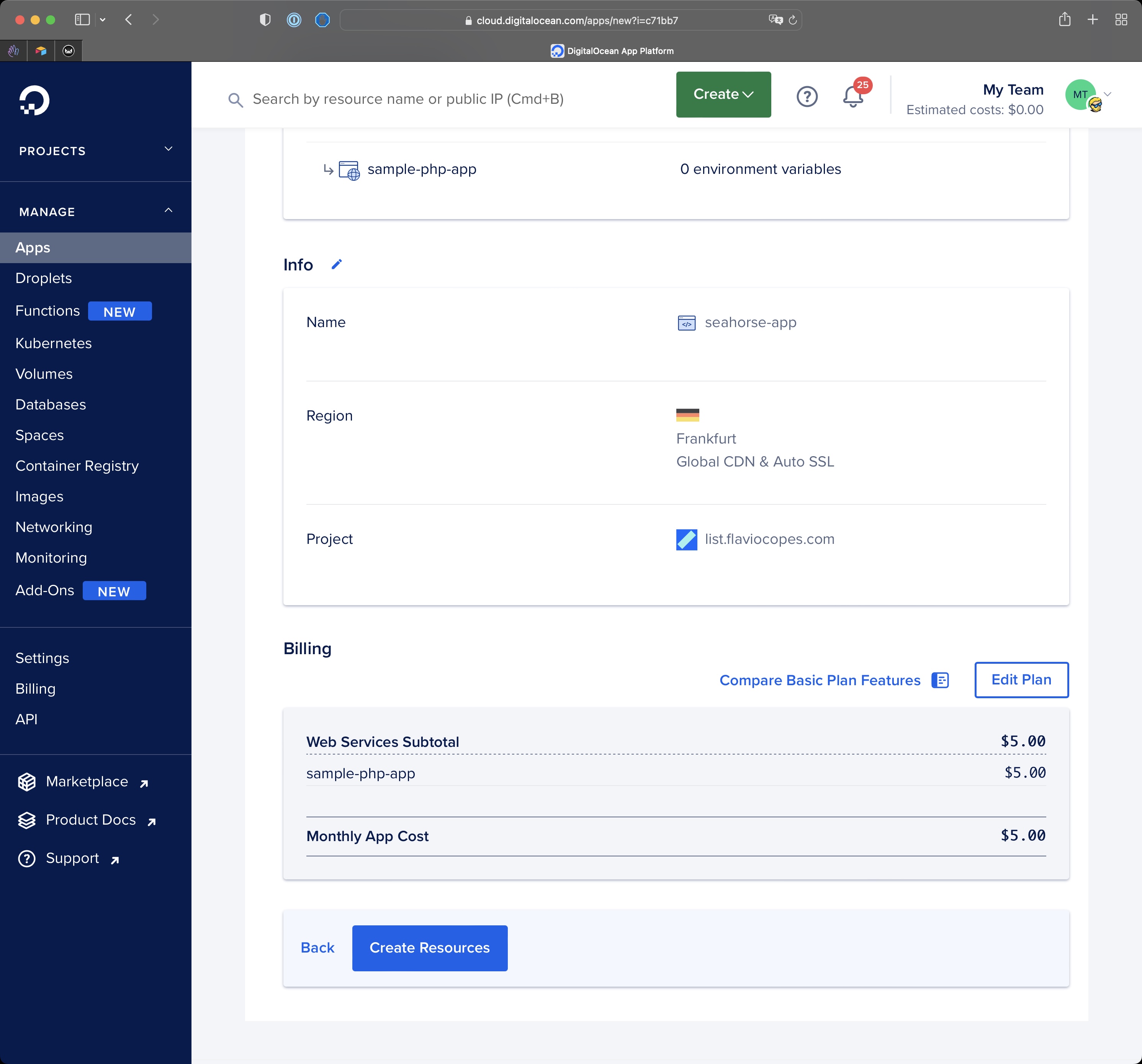
Then go back and press “Next” until the “Create Resources” button appears to create the app. You don’t need any database otherwise that would be another $7/m on top.
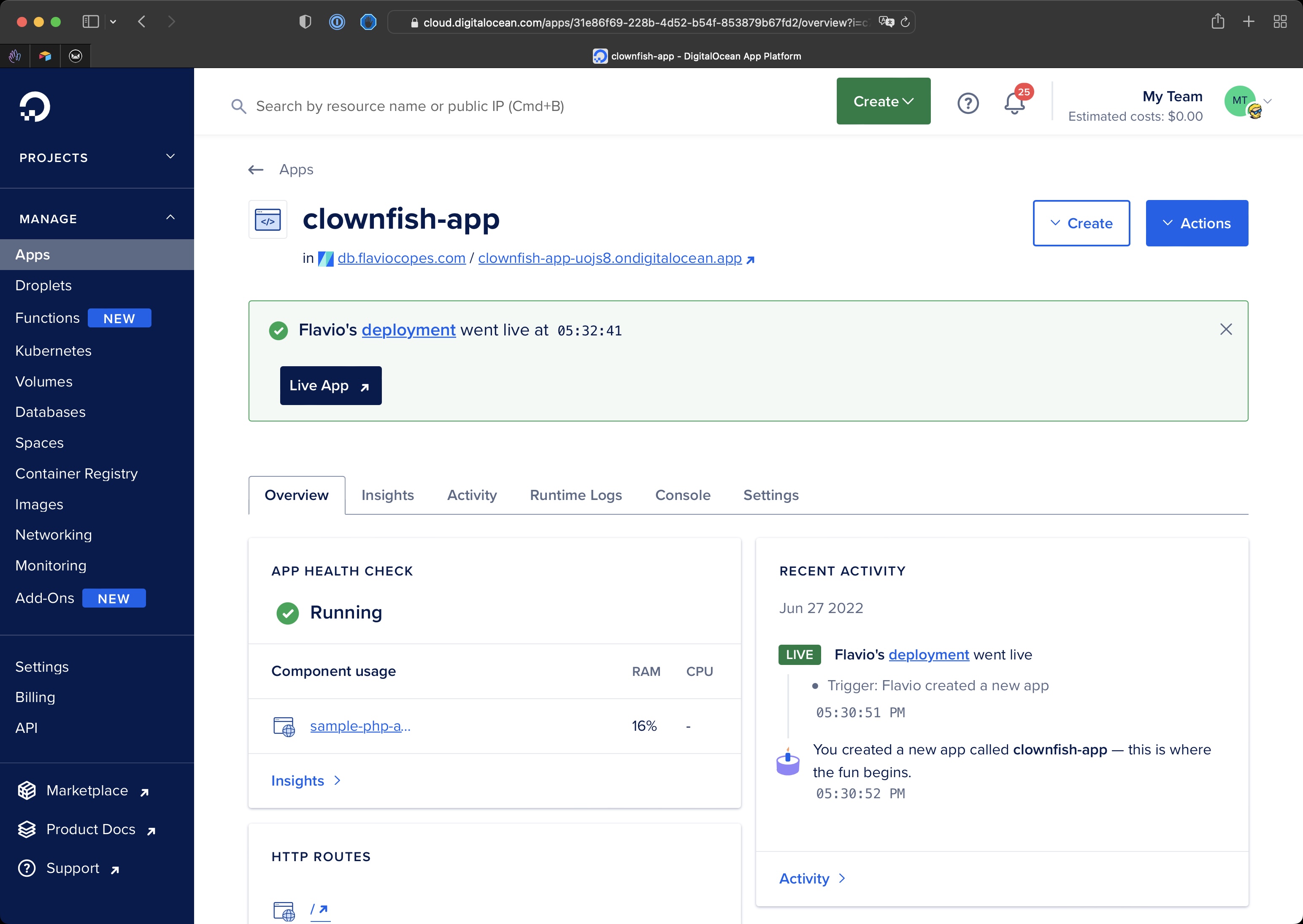
Now wait until the deployment is ready:
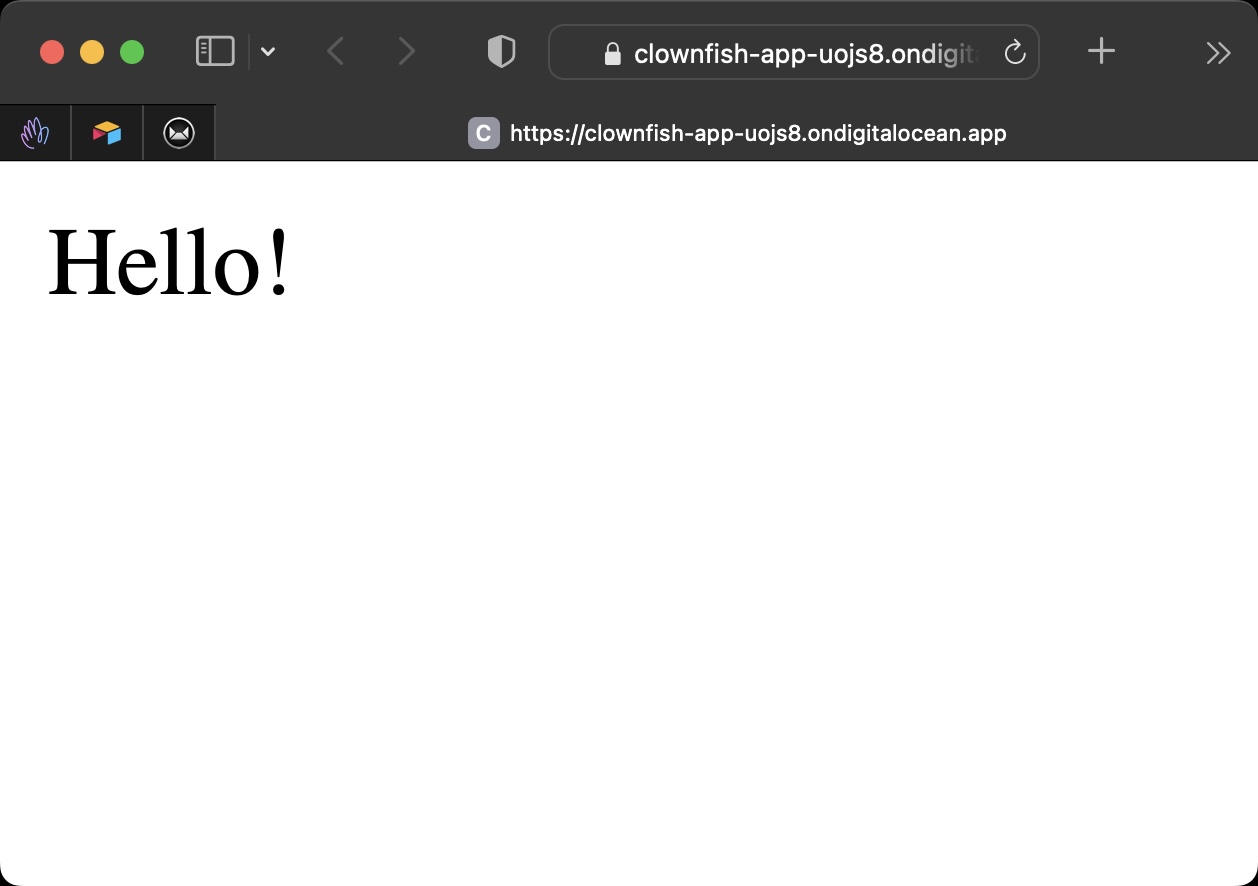
The app is now up and running!
Want me to talk about your product? You can sponsor this site.