
A developer tool by Flavio
Events Logger
See signups, orders, deploys and errors from all your apps in one feed. Your own SQLite dashboard with an HTTP API, a CLI, charts and KPI cards.
Buy Events Logger · $20One-time purchase. Tax included. Source code included.
Node.js 22+ · self-hosted web app
Latest version 1.1.0, released November 18, 2026
What happened in your apps today?
Events Logger collects your app events in one self-hosted dashboard. Signups, orders, payments, deploys, errors. You push events from any app, and they appear in one feed.
Without it, those answers live in five places. Orders are in Stripe, signups in your database, deploys in your CI logs, errors in your server logs. To know if yesterday’s deploy broke checkout, you open all of them and line up the times.
I built it because I wanted to know what was going on in my projects without sending data to a third-party analytics service. Every tool I tried was either too complex, too expensive, or required shipping my data to someone else’s servers.
Events Logger runs on your machine. Events go into a local SQLite database and stay there. One HTTP call from your app adds a line to the feed.
It is built with the AHA Stack (Astro, HTMX, and Alpine.js), with Drizzle and SQLite for storage.
Here’s a one-minute tour with the demo data, from the feed to pushing an event from the CLI:
The shop and every event in the video are fictional, from the included demo data.
Who it’s for
- Indie hackers with several small products. Each app gets its own project with its own feed. You check one page in the morning and see the night’s signups and orders across all of them.
- Developers who want to know when a deploy goes wrong. Push a
deploysevent from your deploy script and anerrorsevent from your error handler. The feed putsDeployed v1.4.4right aboveTypeError in POST /api/checkout. - People who’d rather not add another SaaS. No account, no monthly plan, no data on someone else’s servers. A SQLite file on your machine, which you can back up with one export command.
- Developers building a side project in public. Insight cards hold the numbers you care about, like users online or revenue today, updated with one API call from a cron job.
- Anyone wiring a coding agent or a script to report back. An agent that finishes a long job can push an event with the CLI, and the browser notification tells you it’s done.
Push an event
You push an event with a single HTTP call:
curl -X POST http://localhost:4321/api/events \
  -H "Content-Type: application/json" \
  -H "Authorization: Bearer ev_your-key-here" \
  -d '{
    "project": "q4q8nb18qc2i",
    "category": "orders",
    "title": "Order Placed",
    "description": "Order **#1234** placed by **Maria**"
  }'
The API returns the stored event as JSON with a 201 status code. New categories are created automatically. Send signup and order events from your app to your own dashboard with curl is that call, from a fresh install through the project feed.
The required fields are project, category and title. The description supports bold text and links. You can also attach an emoji icon, a URL that turns the title into a link, a user ID, searchable key-value tags, and a notify flag for browser notifications.
The built-in playground lets you prepare and test a request. It shows the exact HTTP call and gives you a code snippet to copy.
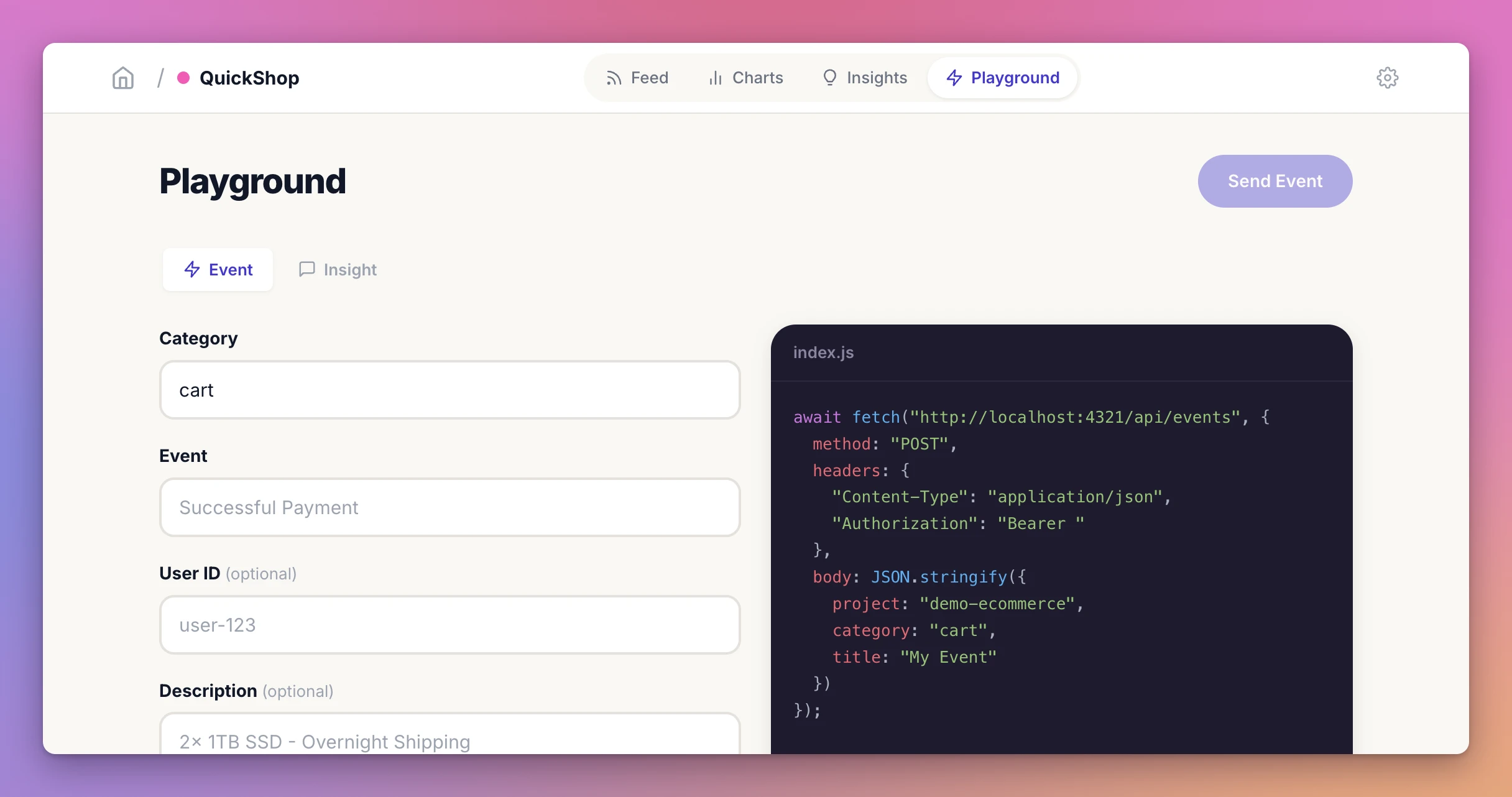
Or use the included CLI:
node cli/index.js push \
  --api-key ev_your-key-here \
  --project q4q8nb18qc2i \
  --category signups \
  --title "User Registered"
Any language works. The package includes code examples for JavaScript, Python, PHP, Ruby, and Go.
The feed
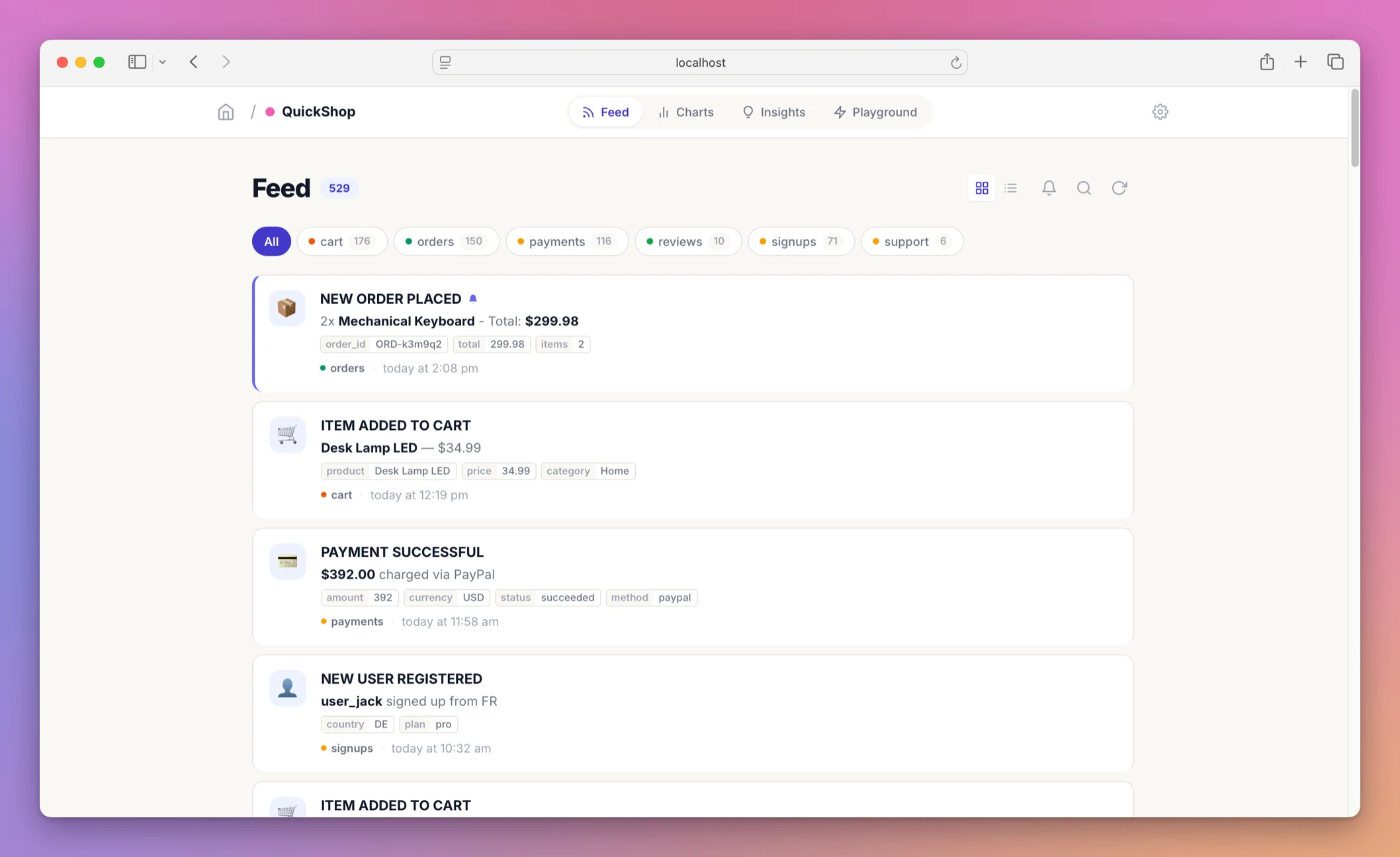
Events appear in a chronological stream. HTMX polls for new events, so the feed updates without page reloads.
You can search titles, descriptions and tags, filter by category, star favorites, and turn on browser notifications for the events that matter.
Each app gets its own project, with its own feed, charts, insights and settings.
A deploy night with it
Say you run a recipe app, and you’ve added two calls: one at the end of your deploy script, one in your error handler.
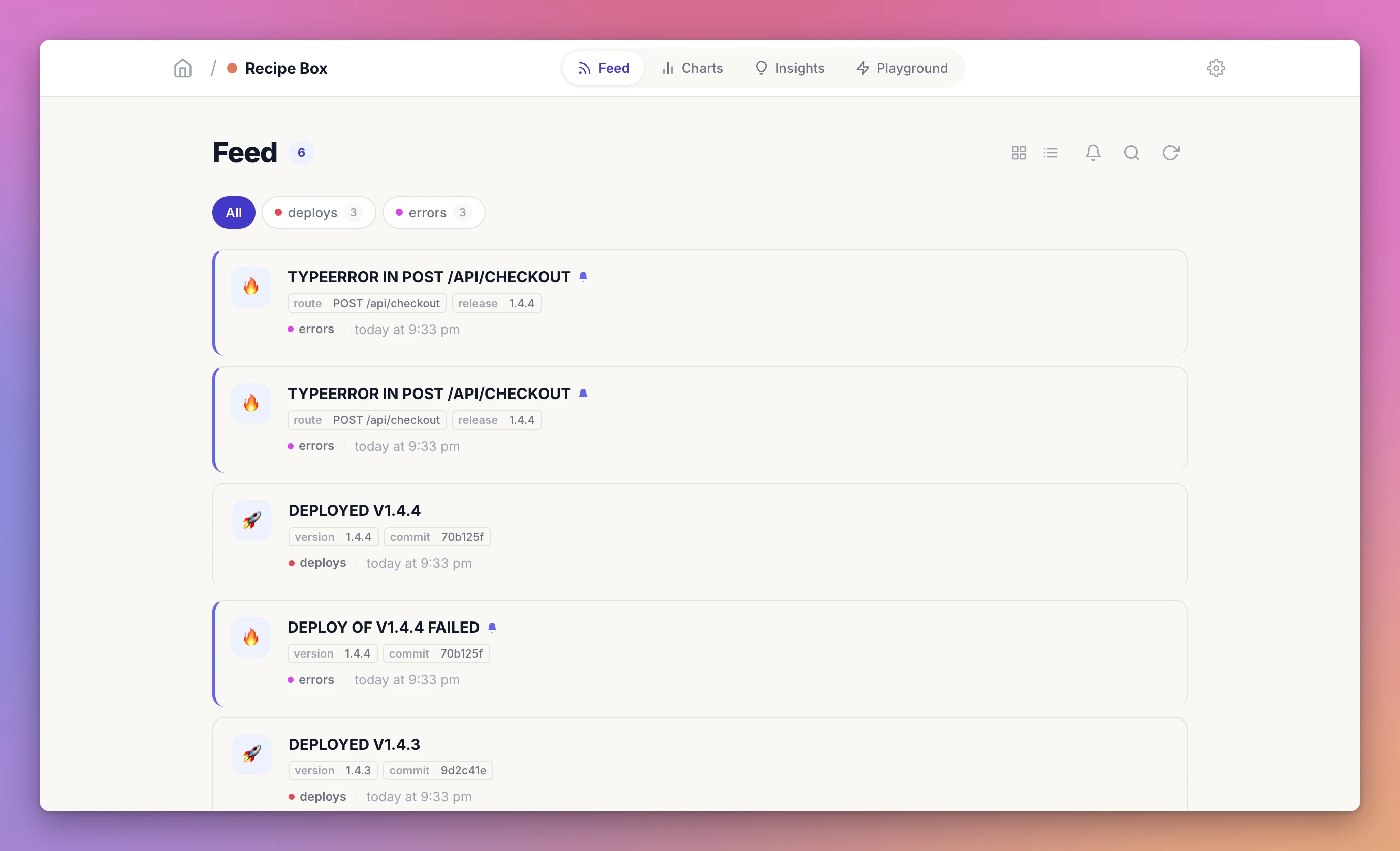
- At 9:30 pm you deploy v1.4.4. The deploy script pushes
Deployed v1.4.4to thedeployscategory, with the version and commit as tags. - A minute later, the error handler pushes
TypeError in POST /api/checkout, tagged with the route and the release, and withnotifyon. - Your browser shows a notification. You open the feed and the error sits right above the deploy.
- Filter by errors to see if it’s one request or all of them. The tags say every error came from release 1.4.4.
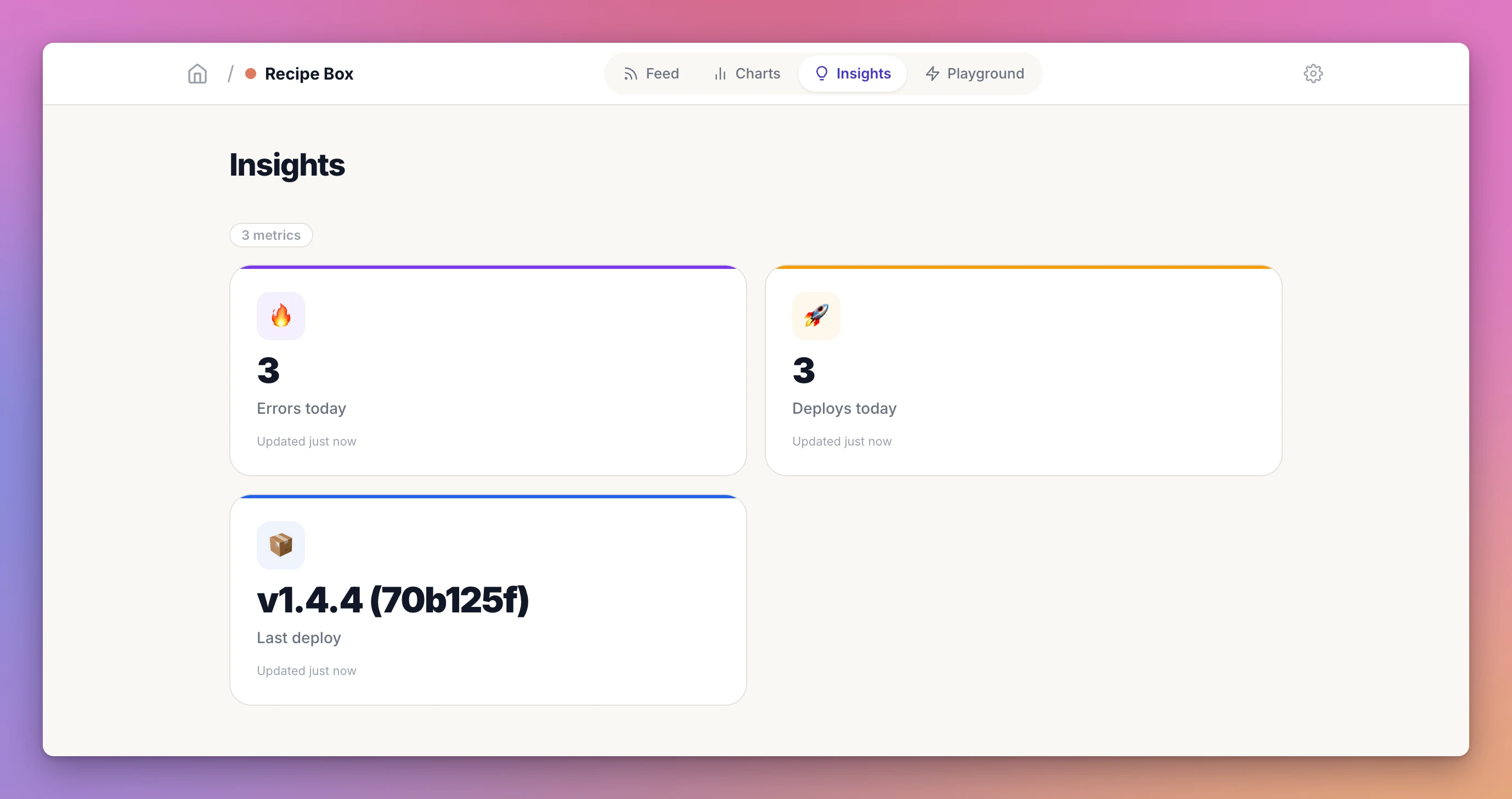
- You roll back and fix the bug. The Deploys today and Errors today insight cards show how the night went.
The tutorial Track deploys and errors as events with KPI insight cards sets up those two calls step by step.
Charts and insight cards
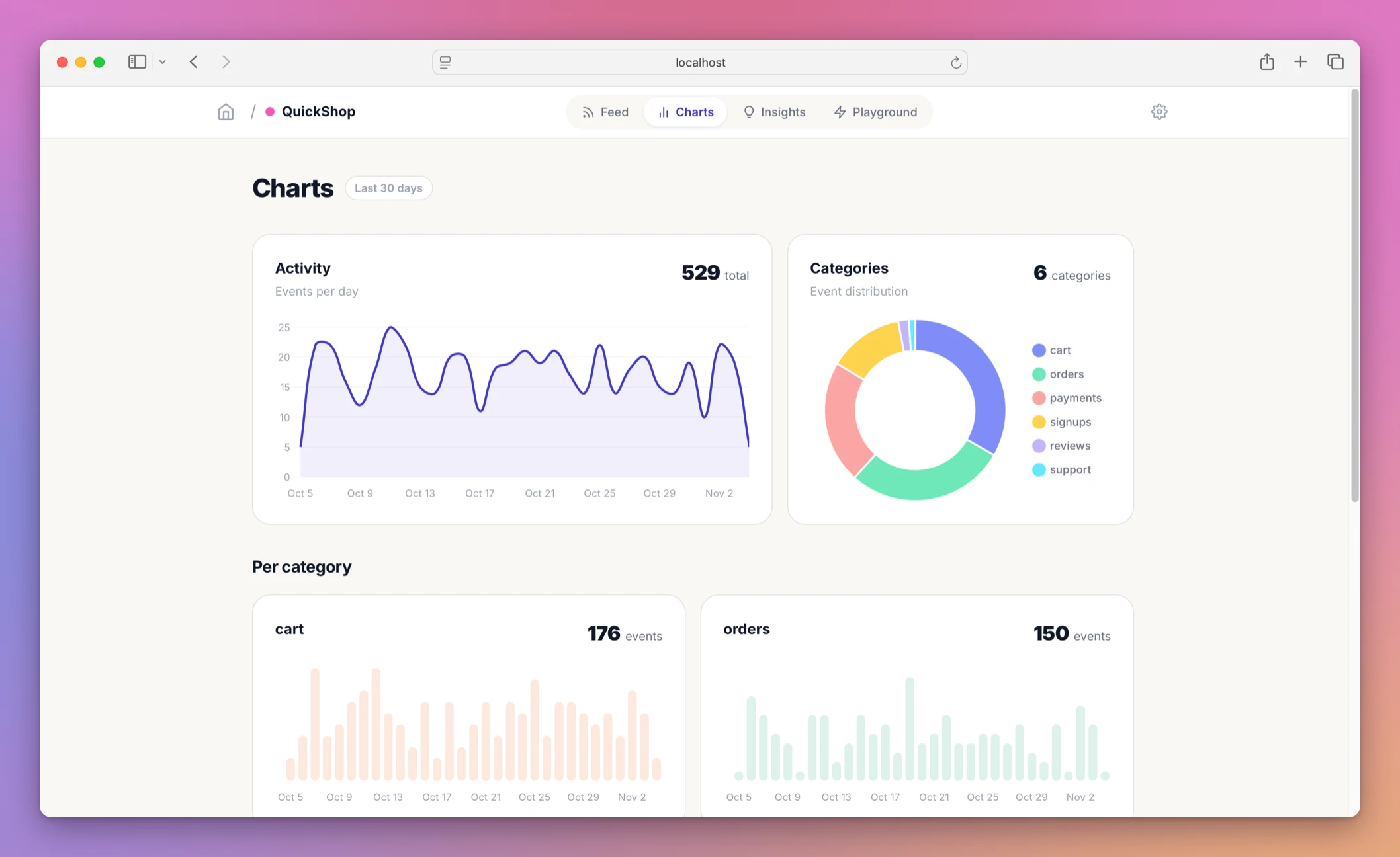
The charts page shows event frequency per category over time, so you can see how activity evolves.
Insight cards track KPIs. You upsert a card by title, so the same call updates the value:
node cli/index.js insight \
  --api-key ev_your-key-here \
  --project q4q8nb18qc2i \
  --title "Online Users" \
  --value 28
Users online, revenue, active sessions. Any number or short text you want on the dashboard.
The HTTP API
Events Logger has a JSON HTTP API you can call from any app. The base URL is http://localhost:4321 when you run it locally, or the URL where you deploy it.
The app generates one global API key when it starts for the first time. Requests that create projects, push events, or update insights send it as a Bearer token. Read-only endpoints don’t need a key.
The API lets you:
- create and list projects
- push events
- query events by project or category
- search events and paginate through the results
- create or update KPI insight cards
- read event counts grouped by category and day
You can read the events back over HTTP too:
curl "http://localhost:4321/api/events?project=q4q8nb18qc2i&category=orders&limit=20"The response includes the events and a cursor for the next page.
Demos and exports
Four demo scenarios ship in the box, with 1800+ sample events for an e-commerce store, a SaaS, a DevOps pipeline, and a content platform:
node cli/index.js load --file demos/all-scenarios.jsonload replaces existing data by default, so try the demos on a fresh install, or export first. --merge merges instead.
You can export everything to JSON anytime, even with the server stopped:
node cli/index.js export --file backup.jsonBecause the export is plain JSON, you are not locked into a hosted vendor. The tutorial Back up your events dashboard and host it on a server covers backups and hosting.
Why not use a hosted event tracker or your logs
There are hosted services for exactly this, and they’re good. They come with accounts, team features and mobile apps. They also come with a monthly plan, and your users’ signups and orders sit on their servers.
The free option is your logs. Every deploy and error is already in there somewhere. Logs are fine for debugging one request. They’re bad at showing “what happened today across my three apps”, and they don’t send you a notification when someone buys.
| Logs or hosted service | Events Logger | |
|---|---|---|
| Where the data lives | Their servers, or scattered log files | One SQLite file you control |
| Cost | Monthly plan, or free but hard to read | $20 once |
| Several apps in one place | Depends on the plan | A project per app |
| Notification on a sale or an error | Depends on the service | notify flag on the event |
| Getting your data out | Export if offered | export to JSON anytime |
| Deploys next to errors | Separate tools | Same feed, filter by category |
What it doesn’t do
- It has no login. The dashboard shows the global API key on its home page, and reading routes are open. Keep it on your machine, or put it behind an authentication gateway if you host it.
- It isn’t web analytics. It doesn’t count page views or track visitors. You send the events you choose from your backend.
- It doesn’t have user accounts or teams. One installation, one API key.
- It doesn’t alert you by email or Slack. Notifications are browser notifications while the dashboard is open.
- It doesn’t collect events by itself. You add the API call where the event happens.
Questions
What do I need to run it?
Events Logger runs with Node.js 22 or newer. SQLite stores data in a local file with zero configuration. No account, cloud service, or external API key is required.
Can I put it on a server?
Yes. It needs the Node server, HTTPS, persistent storage for its data/ folder, and an authentication gateway in front of every dashboard and API route.
Can I call it from the browser?
Keep the API key in backend code. Anyone who sees the key can push events.
How do I back it up?
node cli/index.js export writes projects, categories, events and insights to JSON. For a full backup including settings and the API key, stop the server and copy the data/ folder.
What you get
The purchase includes the dashboard and CLI.
The download includes:
- the built dashboard and Node.js server
- the REST API with CRUD for events, insights, and projects
- the CLI tool for pushing events, managing insights, and loading demos
- automatic SQLite setup on startup
- four demo scenarios with 1800+ sample events
- setup and deployment instructions
- an MIT license
Buy Events Logger
Events Logger costs $20 including tax, paid once. The purchase includes the ready-to-install ZIP.
Download the runtime ZIP from your purchase page. Reopen that page for later versions.
Run your own dashboard
Unzip the download, open Terminal in that folder, and run:
npm ci --omit=dev
npm rebuild better-sqlite3 --ignore-scripts=false
HOST=127.0.0.1 PORT=4321 node dist/server/entry.mjs
Open http://localhost:4321. If you put the dashboard online, follow the deployment instructions and protect both the dashboard and API with an authentication gateway.