Swift: How to use SF Symbols
By Flavio Copes
Learn how to use SF Symbols in SwiftUI with Tab, Label and Image(systemName:), style them, and find symbol names with the free SF Symbols app.
When designing a TabView you have the option to add an icon for each tab using a system image, using the systemImage parameter on Tab:
TabView {
    Tab("First", systemImage: "tray") {
        Text("First")
    }
}
In this case we use tray.
You can also pass the same name to a Label with systemImage, which is what older .tabItem examples still do.
Outside tabs, the usual path is Image(systemName:):
Image(systemName: "tray")A symbol behaves a lot like text: .font sets its size and .foregroundStyle its color. Many symbols are drawn in layers, and .symbolRenderingMode(.hierarchical) uses those layers to add some depth:
Image(systemName: "tray")
    .font(.largeTitle)
    .foregroundStyle(.blue)
    .symbolRenderingMode(.hierarchical)
How do you find out which other icons you can use?
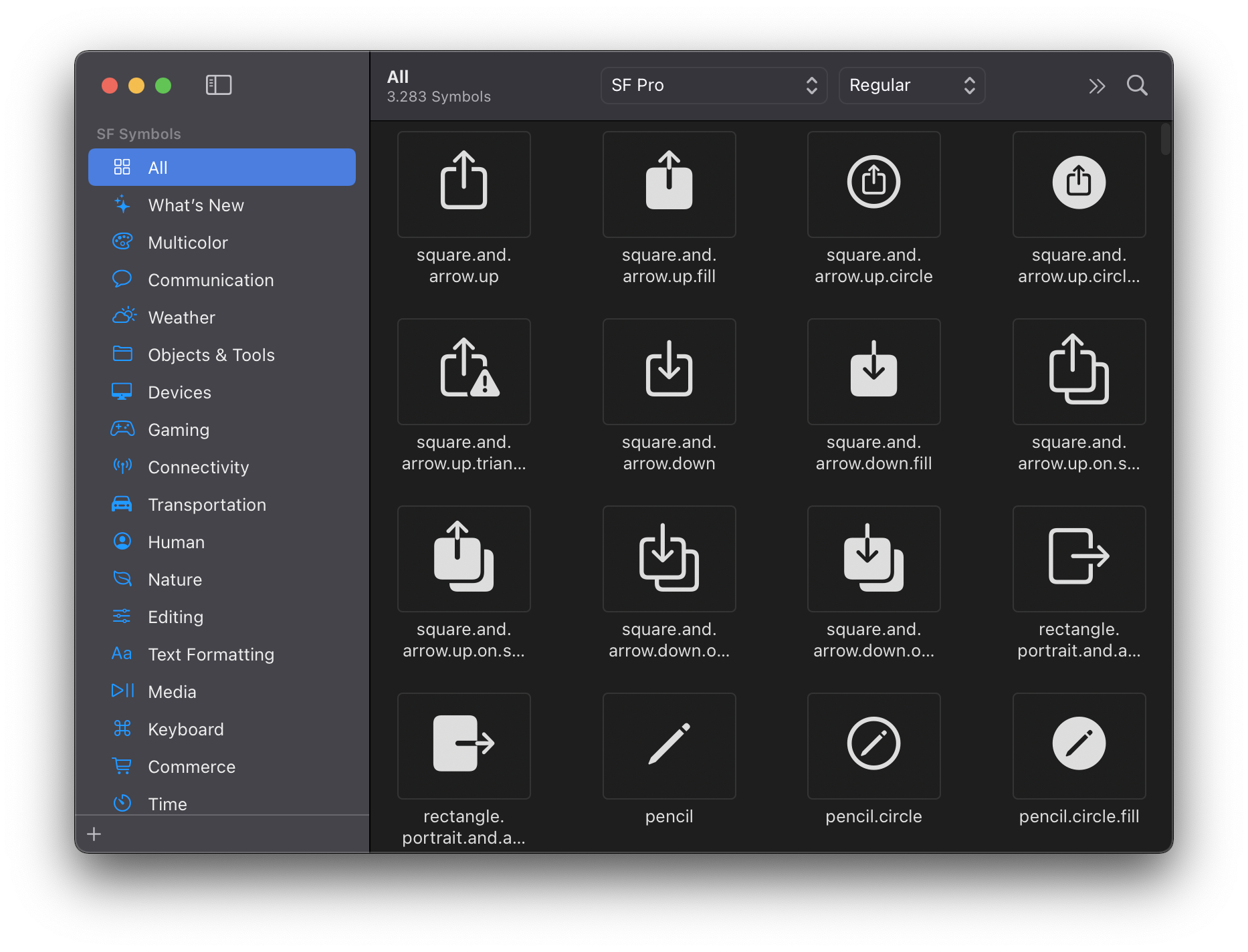
Apple created a free macOS app called SF Symbols. Download it from the SF Symbols page, install it, and use it to browse or search the available symbols. Apple ships a new version every year with the new OS releases. When I took the screenshot below the library had about 3,300 symbols, today it’s over 7,000.
Click a symbol to copy its name, then pass that name to systemImage or Image(systemName:).
Keep your deployment target in mind. Apple adds symbols and rendering features with new system releases, so a symbol shown by the latest app might not exist on an older version of iOS or macOS. On a device that doesn’t have that symbol, Image(systemName:) renders nothing and Xcode logs a warning. The app shows the minimum OS version for each symbol in its inspector.
Want me to talk about your product? You can sponsor this site.
Related posts about swift: